
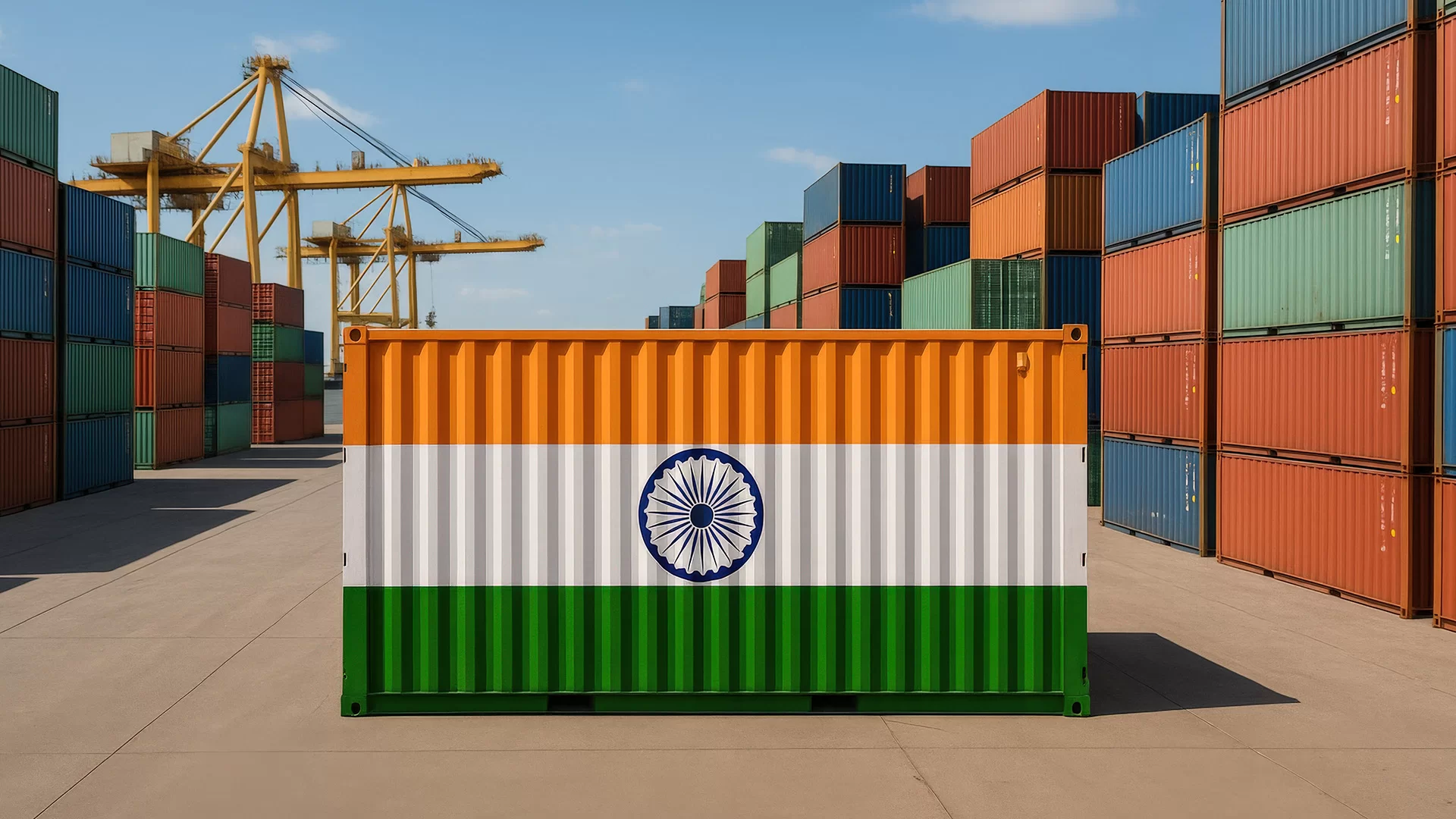

Effective August 27, 2025, India’s exporters face up to 50% tariffs on $48.2 billion worth of goods shipped to the United States, its largest export market. This dramatic escalation in US duties is among the steepest imposed on any trading partner, directly impacting over 55% of India’s exports to the US, while threatening key sectors such as textiles, gems and jewelry, seafood, and MSMEs. Experts warn this tariff escalation could reduce India’s GDP growth by up to 0.5-0.6% in the current fiscal year, revealing the broad economic fallout from these trade disruptions.
Understanding the tariff regime and sectoral impact
The tariff hike represents a doubling from a prior 25% to a combined 50%, levied on nearly seven thousand Indian product lines. This surpasses rates applied to other major exporters like China (30%) and Vietnam (20%), placing Indian exporters at a significant disadvantage.
- Textiles and Apparel: Hit hardest with tariffs up to 64% on exports valued at ₹22,000 crore, the sector faces critical disruptions in orders and rising costs.
- Gems and Jewelry: Exposed to a 52% tariff on a $10 billion export market, industry stakeholders foresee margin erosion and demand slowdown.
- Seafood: Tariffs climbing to 60% threaten shrimp exports, which generate nearly 48% of revenue from the US and directly compete with lower-tariff exporters such as Canada and Chile.
- MSMEs: Comprising over 70% of the export-oriented manufacturing sector, MSMEs are disproportionately hit due to limited access to finance and credit.
- Other Sectors: Industrial machinery, furniture, and organic chemicals face tariffs upwards of 50%, while some sectors like pharmaceuticals, electronics, and petroleum products remain exempt.
Government Response: Tax reforms and relief packages
Recognizing the deep economic threat, the Indian government has committed to multi-faceted policy support designed to bolster exporters and support sectoral recovery:
- Tax and Duty reforms:
GST cuts on consumer goods aim to reduce input costs for producers. Broader tax reforms focus on simplifying compliance and improving liquidity for exporters, alleviating the financial burden catalyzed by tariff shocks.
- Export relief packages:
Announced relief measures target duty drawbacks, working capital assistance, and export credit insurance to cushion MSMEs and labor-intensive sectors.
- Four pillar schemes for export promotion:
- A ₹2,225 crore Export Promotion Mission emphasizing market diversification beyond the US.
- Enhanced credit support expanding MSME access to affordable working capital.
- Export insurance schemes to reduce investor risk.
- Increased subsidies and remission under the RoDTEP scheme, improving refund rates on taxes embedded in exports.
- Sector-specific support:
The government extended duty-free cotton imports to ease pressure on garment manufacturers. Targeted packages for gems, jewelry, seafood, and MSMEs focus on sustaining shipment flows, order retention, and preserving employment.
Also Read: India’s Bold Move to Challenge Dollar Dominance: What It Means for BRICS and Global Trade
Economic and strategic outlook
India-US bilateral trade reached $129 billion in goods in 2024, with the US carrying a trade deficit of $45.8 billion in India’s favor. Yet, escalating tariffs have skewed competitiveness in favor of countries like Vietnam and Bangladesh, who enjoy lower tariff rates. This shift necessitates urgent market diversification initiatives and renewed trade diplomacy.
Policy analysts emphasize that beyond short-term relief, India must deepen global supply chain integration, embrace digital trade platforms, and accelerate technology adoption in export sectors.
Conclusion
The imposition of 50% tariffs by the US on a vast array of Indian exports marks a pivotal challenge for India’s trade landscape, threatening the growth of vital sectors and impacting millions of livelihoods. While the immediate economic forecasts indicate a potential slowdown in GDP growth by up to 0.6%, prompt government interventions—such as GST cuts, targeted relief packages, and export promotion schemes—signal a strong commitment to cushioning exporters from the shock.
The path forward demands a strategic pivot toward market diversification, sustainable supply chain resilience, and accelerated reforms. India’s exporters, supported by proactive policies and innovation, are gearing up to transform these challenges into opportunities, reaffirming their vital role in the global economy and the nation’s economic